
Apr 082012
 

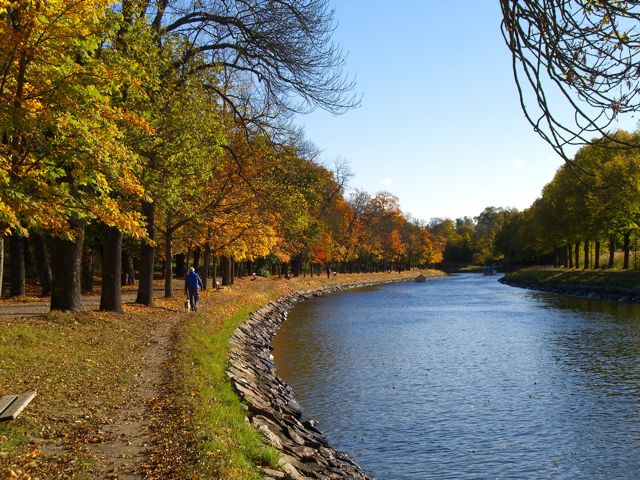
A Park to Walk in StockholmThe advantages of counselling and therapy shouldn’t just be psychological. Walking while talking is a new approach to talk therapy that benefits the body as well as the mind.

As a therapist who personally enjoys exercise and the positive effects of movement, I was not surprised when I read in the Sydney Morning Herald about research that demonstrated sitting was bad for our health.

I’ve written before about how exercise is important to both our physical and psychological health. Sitting for prolonged periods can reduce lifespan so decreasing our sitting time is just as critical to health as taking exercise. But modern lifestyles have many of us spending long work hours in front of our computers. It can be difficult to remember to take regular breaks let alone to keep moving our bodies.

So I am now also offering counselling, coaching and therapy in English in Stockholm while walking outdoors. This is a unique service for Stockholm that fits with making it easier and more beneficial for people to meet with a counsellor.

The Benefits of Walking Therapy

Taking a walk each day can lift mood, free thinking and help us manage emotions. For some people, it can be a reasonable alternative to medication. But there are other advantages to therapy while walking outside as well. We know sunlight is important for production of vitamin D and general health. Talking with a counsellor while taking a walk treats your whole person, body, mind and spirit. The practice of walking itself can quieten thoughts and relieve anxiety. It’s refreshing, relaxing and the rhythm of a walk can also help to sort out problems.

Like other forms of counselling, Walking Talk Therapy is an opportunity to discuss strategies, get things in perspective, or simply get a sounding board for the changes you know you want to make. Being out in nature is conducive to healing and improved mental health. Expats can speak English during the appointment and benefit both from the change of scene and a compassionate listening ear. People who have experienced disappointment, loss or even trauma may find that time spent in nature is therapeutic in itself. Those seeking to improve their physical health and motivation can find active consultations even better than sessions that are office based. So counselling appointments while you walk offer a combined form of treatment.

With my Walking Talk Therapy in Stockholm, you are welcome to request help with the same kinds of goals or concerns you bring to office based appointments. Many people who come to see me talk about depression or anxiety, family and relationship issues. But the areas I specialise in include:

How Does Walking Talk Therapy Work?

Usually we start the first appointment in my counselling rooms on Kungsholmen in central Stockholm. If you decide to proceed with a walking appointment, we can go to Rålambshovsparken or along Norr Mälarstrand by Riddarfjärden. These parts of the island are quite beautiful throughout the year and provide plenty of open space for private conversations while walking. We can hold onto important points by jotting them down or taking an audio note as we go. Walking Talk Therapy is suitable for therapeutic approaches such as CBT (cognitive behaviour therapy) and narrative therapy.

If the weather is bad we can still meet in the office. The Swedish have a saying “there is no bad weather, only bad clothing” but it is always your choice whether we go out for a walk or sit inside and chat over a cup of tea or coffee.

So why not combine therapy and some exercise? It’s healthy, refreshing and better for both of us! For daytime appointments until 5pm you are welcome to choose a 50 or 75 minute consultation depending on how much time you have available.

My goal is to make it easier for people to see me so, of course, if you prefer to sit comfortably and talk we can still do that. I still offer a range of options including online counselling over webcam from Stockholm or anywhere in Sweden.

Call now on 08-559 22 636 and leave a message if I don’t answer.

Or contact me through the form on my website for more details.

I look forward to us walking together!

Nov 102011
 

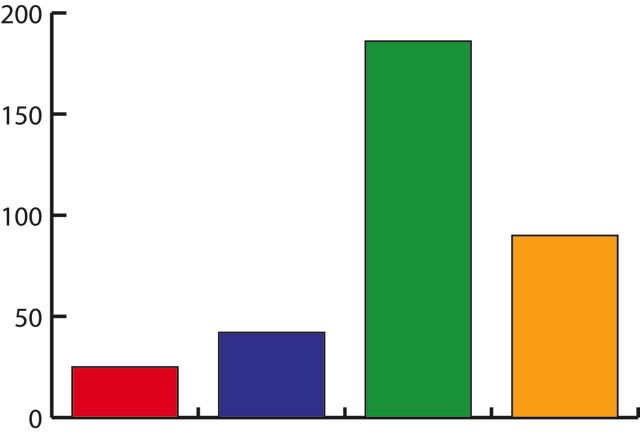
bar graph imageIs psychological disability in Sweden really stopping so many from working?

The Swedish newspaper Dagens Nyheter has run a story about the sharp increase in numbers of young people leaving work and put onto disability pensions (known as ‘activity support’ for those under 30 and ‘sickness benefits’ for those 30-64).

Fewer young people are returning to employment after being pensioned off work, a phenomenon that has been referred to as a ‘ticking time bomb’ in view of the fact that many may be destitute by the time they are 30.

Sweden is not alone here. There were increases in young people starting on disability support in other Scandinavian OECD countries between 1995 and 2007. In Finland the increase was 5 percent, in Denmark 10 percent but Sweden had a massive 80 percent increase! That’s almost 30,000 people under 30 in Sweden who are on a disability pension.

Psychiatric Disorders Becoming More Common in Sweden

So why the huge increase? Well 73% of those young people have been given medical psychiatric diagnoses such as autism, ADHD and Aspergers. Could it really be that Sweden had such a rise in psychiatric disorders and mental disabilities compared to our Nordic neighbours? Is it something in the water?

As a counsellor, therapist and coach, I am often asked about such diagnoses and the increases. I think people expect me to say something about teenage computer gaming culture or genetics or to applaud the ‘science’ responsible for discovering such a vast previously undiagnosed population.

But what I see happening in Sweden is that so-called ‘normal’ behaviour is becoming more defined. The goal posts for what is considered normal are being brought closer together. The tolerance for non-conformity and extremes of mood and behaviour is reducing. It is becoming harder to be ‘lagom’!

In Sweden, psychiatric health has been constructed as a medical problem. Both anxiety and depression are treated primarily with medication. But drugs are also heavily prescribed for those whose attention, communication techniques or social skills fall outside what is measured to be the norm. And unfortunately, those norms are progressively less accommodating.

There’s no doubt that the pathologising of human experience is increasing in many countries. More people are being diagnosed as depressed, anxious, having a mental disability or disordered in some way. And this corresponds to increasing expectations that we fit prescribed ways of being and relating to each other. In workplaces and schools across Australia, the United Kingdom and America, more standards of performance are being established and procedures for selection are becoming more sophisticated.

Fortunately, not all mental health, psychotherapy or counselling practitioners favour responding to diversity with drugs or exclusion and many take a more norm-critical approach. Narrative therapy, Open Dialogue and other collaborative therapeutic practices are approaches which honour what people have to say about their own experience, rather than categorise us using medical terminology.

My hope is that eventually the doctors, psychiatrists, psychologists, therapists and others responsible for measuring, diagnosing and categorising people will see the limitation of these practices. I look forward to a new era when Swedish society ceases to be obsessed with locating its deficits and deficiencies but instead acknowledges the unique skills, competencies and abilities of all individuals. A time when the expertise we bring to life’s challenges is respected and valued by the health professionals we consult and diversity is appreciated rather than shunned. Perhaps then we will see more young people participating in the workforce in Sweden.

Sep 112011
 

rushing for the trainAnyone trying to find an English speaking therapist in Stockholm has a story why he or she moved to Sweden. When people email or call me about my therapy services they often want help with couples counselling, family difficulties or work issues and career direction.


Counsellors working with expats in Stockholm know living in a foreign culture is stressful and are aware of the difference it can make to access counselling in English.


1. It’s important your therapist understands you

Often when people start talking and opening up with me about the difficulties they experience, their problems start to ease and even to ‘dissolve’ in the conversation. Sometimes these conversations are about recovering tools and skills used in the past. This is why it is so useful to meet with someone else who is a native English speaker. The experience of therapy is better when your therapist understands the expressions, subtleties and nuances of your language as well.

Professional counselling is more than just listening and a good therapist should be able to ask you questions that will open up new perspectives and encourage you to think in different ways. But just ‘getting it off your chest’ is a start and can lead you to feel better, more motivated and more capable of using skills and tools for dealing with anxiety, depression and changes in mood.


2. Nothing beats experience

The problems people experience after moving to Sweden are not always attributable to just one cause, but can be a result of the interaction between several factors including the climate, Swedish cultural differences, family expectations, relationship issues or adjusting to life as an expat. Having myself relocated to Stockholm from an English speaking country I relate personally to the challenges of living in Sweden.

Resolving psychological matters is not always straightforward but my professional experience is that talk therapy and other appropriate treatment usually results in finding new ways forward. This is the power of therapeutic conversations: the possibility to make new meaning out of situations where you have felt stuck or lost or hopeless.


3. More options than the Swedish healthcare system

Sweden has one of the best public healthcare systems in the world. However it isn’t perfect and can be slow, bureaucratic and offers little choice of psychological treatment other than a limited course of CBT (cognitive behaviour therapy) or perhaps a psychoanalyst who is selected for you. Deciding to meet a private English-speaking therapist means you can choose the approach that suits you and, most importantly, shop around to find a practitioner you like and can relate to.

If you are making the transition to living in Stockholm, or even if you have been here for some time, the freedom to attend counselling when and how often you want might be important to you. Having flexibility around your appointments and not having to queue for treatment can help you to cope and be a factor in your recovery. I always offer to work in with other health providers where appropriate and this is another benefit of using a private therapist who works primarily in English.


Available for all English speakers

Whether you are Australian or from New Zealand, British, Irish, South African, Canadian or an American from the US, commencing therapy, counselling or coaching with a qualified professional who speaks the same language can avoid the limitations of the public health services.

  • If you think you might be suffering from SAD (seasonal affective disorder), anxiety, depression, cultural adjustment, drinking problems or stress…
  • If you want one-to-one therapy, counselling for a relationship as a couple or as an individual…
  • Or if you are just looking for a qualified person to be a sounding board’,

I welcome you to contact me and discuss the possibilities of working together in Stockholm.

Oct 212010
 

English speaking therapy, counselling & coaching

I am a professional counsellor, coach and therapist providing services in English in Stockholm. I offer longer appointments from comfortable and discreet premises near Hornstull on Södermalm. I also do online therapy and webcam counselling throughout Sweden and in other countries.

Counselling Therapy Fridhemsplan StockholmAsk a question or make an appointment now

Check my qualifications and experience

Read more on Forward Therapy Stockholm

Cost of Services and Fee Schedule